
Try it
How to Test Electroculture in Your Own Garden
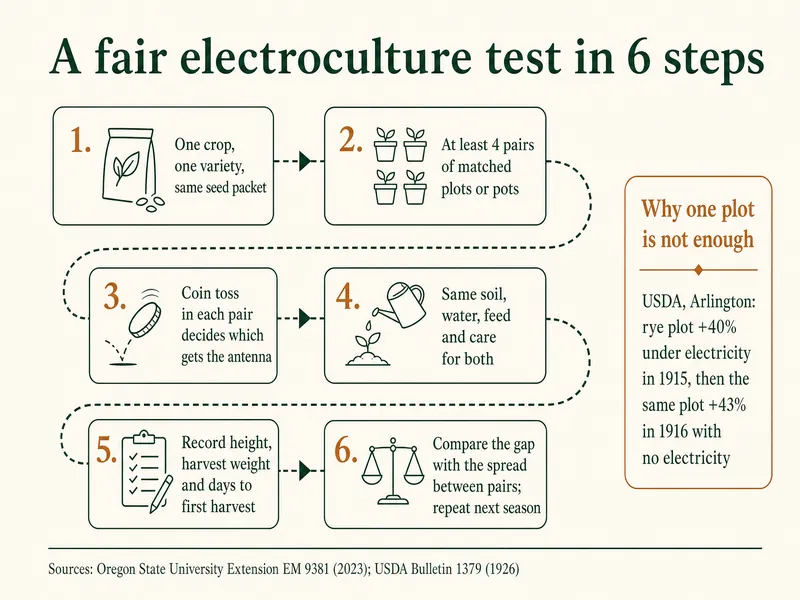
How to test electroculture: grow one variety in at least four matched pairs of plots, let a coin decide which plot in each pair gets the antenna, weigh every harvest, and repeat next season.
On this page
- How do you test electroculture fairly?
- Why do before-and-after photos mislead?
- How many plants and beds does an electroculture test need?
- How do you randomize treated and untreated plants?
- What should you measure and record?
- How do you read the results of an electroculture test?
- How should you share your electroculture results?
- Common questions
Key takeaways
- A fair test needs matched plots, one variety, random assignment and several replicates; Oregon State University Extension says "four replicates are a good place to start".
- Even the controlled 2025 PLoS One trial, with 10 plants per treatment per crop, saw a 2.5 g bump in beets and turnips that its authors put down to small samples.
- The USDA's 1926 bulletin recorded a rye plot 40 per cent ahead under electrified wires in 1915, then 43 per cent ahead with no electricity in 1916.
- Christofleau's booklet (c. 1927) offered a bean photo and a "three times" claim from Metz with no weights; one picture cannot separate an antenna from soil, manure or luck.
- Record harvest weight per plot, plant height and days to first harvest, using plot numbers rather than labels that reveal the treatment.
- If the antenna plot wins all four pairs, chance alone would do that about 1 time in 16; repeat the test next season before drawing a conclusion.
How do you test electroculture fairly?
You test electroculture fairly by comparing plants that differ in one way only, the antenna, and by letting chance decide which plants get it. Everything else stays the same: seed packet, soil, sowing day, water, feed and care. The comparison has to be repeated several times in the same garden, because any two plots differ for reasons you cannot see.
Extension researchers use the same three ingredients for on-farm trials: a control, replication and randomisation. Oregon State University Extension's guide EM 9381 tells growers to "Treat your control exactly like the other treatment plots, except for the difference or differences you are testing", and warns against adopting a practice "based on an unreplicated test". A garden is smaller than a farm, but the logic is identical.
This matters because the evidence so far is weak and mostly negative. The only controlled trial of copper rods found "no consistent evidence" of benefit, and the USDA's field trials of 1907–18 found "no well-defined increase in yield". A careful home trial will not overturn those results on its own, but it is the honest way to answer the question for your soil and your crop. The background is on does electroculture work and electroculture studies.
Why do before-and-after photos mislead?
Before-and-after photos mislead because they change many things at once: the season, the weather, the soil's history and the gardener's attention. A bigger crop this year than last could come from rain, a warmer spring, compost added in autumn or more careful watering. Nothing in the picture separates those from the antenna.
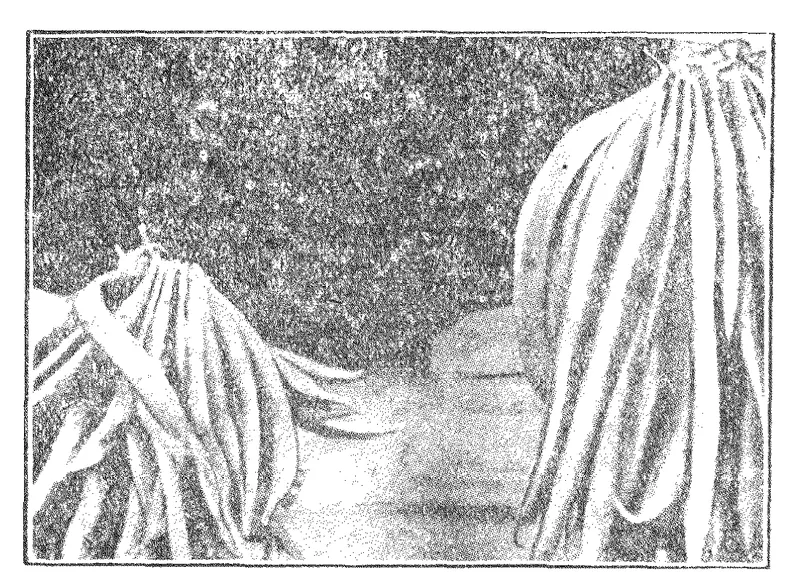
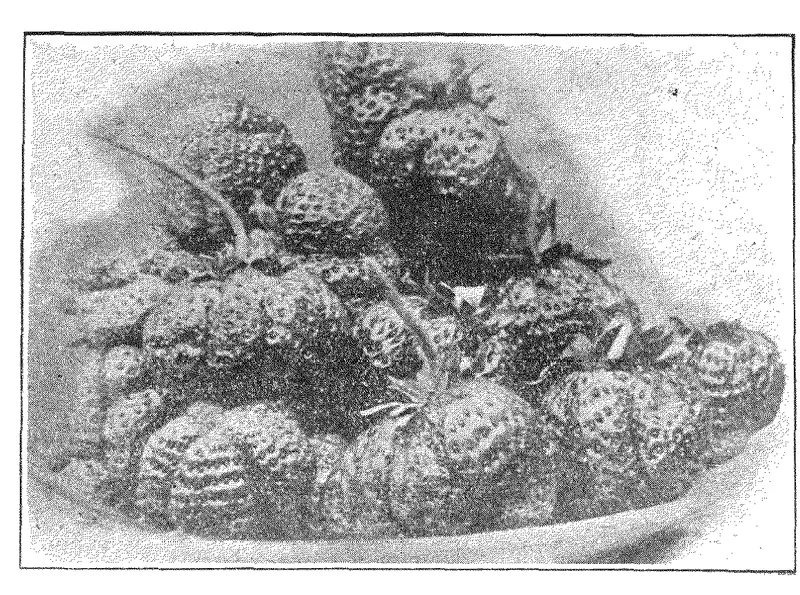
Side-by-side photos of a single treated and untreated bed are only a little better. Christofleau's booklet Electroculture (c. 1927) printed a photograph of two bunches of beans, one grown with manure and one credited to the apparatus without manure. The same booklet reprinted a 1921 report from the Agriculture Station of Metz saying an electrified bean parcel produced "THREE TIMES the crop of the comparative parcel", yet it gave no weights or plot sizes and itself said trials should continue for "two or three years". These are historical reports and promotional claims, not measurements.
The USDA showed why single comparisons fail. At its Arlington farm, a rye plot under electrified wires out-yielded its control by 40 per cent in 1915. In 1916 the wires were switched off and the same plot still beat its neighbour, by 43 per cent: the soil, not the electricity, made the difference. Another case from the same bulletin: some of the largest British gains, at Lincluden, traced back to control strips yielding just 28.9 and 33.0 bushels per acre while the other strips gave 43 to 46. More on that history is on the 1926 USDA report page.
How many plants and beds does an electroculture test need?
An electroculture test needs at least four pairs of matched plots or pots, each holding several plants, and more pairs make the answer clearer. Oregon State's guide suggests four replicates as a starting point and notes that small differences, such as a 5 per cent gain, need "many more replicates" to show conclusively. The University of Nebraska's CropWatch guide asks for each pair of strips to be repeated "usually a minimum of five times".
Numbers behind a fair test
- 4Replicates Oregon State Extension calls "a good place to start"Oregon State University Extension, EM 9381
- 10Plants per treatment per crop in the 2025 copper rod trialPLoS One, Chier and colleagues (2025)
- 43%Gap between two rye plots with no electricity on eitherUSDA Department Bulletin 1379 (1926)
- 1 in 16Chance an inactive antenna wins all 4 pairs by luck aloneSimple probability, 0.5 to the power 4
Why so many? Plants vary even in identical conditions. The 2025 trial at Marquette University grew 10 plants per treatment for each of four crops, more than most home gardens can spare, and still recorded slightly heavier beets and turnips under buried copper, which the authors judged "likely" to be "a result of small sample sizes". With two plots, one lucky corner can decide the result. With eight or more, luck starts to even out.
A practical home layout is four to six pairs of plots about 1 m (3 ft) square, or eight to twelve identical pots. Put three to six plants of one variety in each plot, and choose a quick crop you can weigh, such as radishes, lettuce or bush beans.
How do you randomize treated and untreated plants?
Randomize by pairing similar plots and tossing a coin for each pair: heads, the antenna goes in the first plot; tails, in the second. Do it before you look at the seedlings, and write the results on a plot map.
Pairing first is what extension guides call blocking. Group plots that share the same sun, slope and soil into a block, then randomize within the block, so that each pair compares like with like. The Nebraska guide explains the risk of skipping this: if a treatment always sits on the same side, "you will not know if the yield increase is due to soil conditions" or the treatment. Iowa State College even dug and refilled furrows without cable in its control plots in 1930–32, so that tillage was the same on both sides of its electroculture comparison (Research Bulletin 210, p. 11).
Do the same in a garden:
- Give every untreated plot a plain stake of the same size as the antenna, so both get the same disturbance.
- Set antennas and plain stakes on the same day, at the same depth, as described on antenna placement.
- If you use pots, rotate them all on a fixed schedule; the 2025 trial moved its pots around the table every week.
- Number the plots and keep the map indoors, so the person weighing the harvest does not need to know which is which.
That last step makes measuring "blind" in a simple way. If a friend or family member weighs and records by plot number only, hopes and expectations cannot nudge the scale or the tape measure.
What should you measure and record?
Measure harvest weight per plot first, then days to first harvest and plant height, and write every number down on the day. Harvest weight is the result most gardeners care about and the hardest to fool yourself on. Height is easy but can mislead, because taller plants do not always yield more.
| Item | Plot __ (antenna or plain: check map later) | Plot __ (antenna or plain: check map later) |
|---|---|---|
| Crop and variety | ||
| Sowing or transplant date | ||
| Plants at start / plants at harvest | ||
| Height of tallest three plants at 4 weeks (cm) | ||
| Date of first harvest | ||
| Total harvest weight (g) | ||
| Pest, disease or weather damage noted | ||
| Watering and feeding (same for both: yes/no) |
Use a kitchen scale in grams, weigh on the same day for both plots in a pair, and weigh the same part of the plant each time: roots for radishes, heads for lettuce, pods for beans. Note anything unusual, such as slug damage or a dog digging, against the plot number. If a plot is badly damaged by something unrelated, drop the whole pair rather than just one plot.
For building the antennas themselves, see how to make an electroculture antenna and copper rods in the garden.
How do you read the results of an electroculture test?
Read the results pair by pair: count how many pairs the antenna plot won, and compare the size of the typical gap with how much plots vary anyway. A real effect shows up as the antenna plot ahead in most or all pairs, by more than the ordinary spread between pairs.
Start with the count. If an antenna does nothing, each pair is a coin toss, so the antenna plot wins all four of four pairs about 1 time in 16 and all six of six pairs about 1 time in 64. Winning at least three of four happens by chance about 5 times in 16. So three wins out of four is not evidence; six out of six is worth repeating.
Then look at the size. Work out the difference in harvest weight for each pair, as a percentage of the plain plot. If the gaps swing from +20 per cent in one pair to −15 per cent in the next, the average means little. If every pair shows a similar gain, it is more interesting.
Finally, repeat. Oregon State's guide notes that repeating a trial over more years adds replicates and makes the result more convincing, and Nebraska's guide says results are "more reliable if you have data from multiple years or locations". One season in one garden is a start, not an answer.
How should you share your electroculture results?
Share all of your results, including the pairs where the antenna lost, together with the crop, the number of pairs, the dates and how you randomized. A post that shows only the best bed repeats the mistake of the 1920s booklets.
- Report every pair, in a table, not just the average.
- Say what kind of antenna you used, how deep, and what the control plots had instead.
- Describe the result in plain terms: "antenna plots were heavier in 3 of 4 pairs, by 4 to 12 per cent".
- Avoid words like "works" or "proof"; a home trial is an observation, one level above an anecdote.
- If you repeat it next season, say so, and report both seasons.
Honest null results are useful. A 2024 Washington State University Extension article reports horticulturist Linda Chalker-Scott's view that electroculture's promises are not backed by "reliable scientific evidence". Well-run home trials, shared in full, are one of the few ways that picture could change in either direction.
How we put this page together
This page draws on Oregon State University Extension EM 9381, Experimenting on the farm: Introduction to experimental design (Tanner, Jones and Verhoeven, May 2023), University of Nebraska–Lincoln CropWatch, "10 Steps for On-Farm Research Success" (April 2016), the 2025 PLoS One copper rod trial by Chier and co-authors, the USDA's 1926 Electroculture bulletin (No. 1379, pp. 12–13 and 28), Iowa Research Bulletin 210 (Dorchester, 1937, p. 11), Christofleau's booklet Electroculture (c. 1927, Metz report on printed p. 31 and bean photograph) and Washington State University Extension (Sheehan, 2024), checked in October 2026. The chance figures (1 in 16, 1 in 64, 5 in 16) are simple coin-toss arithmetic. Left out: readers' or forum results, which this site does not collect or verify, and formal statistics beyond a pair count.
Common questions
Can you test electroculture in pots instead of beds?
Yes, and pots are easier to keep matched. Use identical pots and potting mix, put an antenna in half chosen by coin toss and a plain stake in the rest, and rotate all of them on a schedule, as the 2025 trial did weekly.
How long should an electroculture test run?
At least one full crop cycle from sowing to harvest. Fast crops such as radishes or lettuce often leave time for a second run in the same season.
Can you test electroculture on one plant?
No. With one treated and one untreated plant, ordinary variation between individual plants can easily outweigh any effect. Use several plants per plot and at least four pairs of plots.
Should you test different antenna designs at the same time?
Only if you add more plots. Every extra design needs its own set of replicates, so start with one design against plain stakes and test others in later rounds.
What if the antenna plots grow better in the first week?
Early growth often evens out, and the 2025 trial found no effect on plant height. Keep recording to harvest and judge by harvest weight and days to first harvest.
Is a test fair if the antenna plots get more attention?
No. Extra watering, weeding or checking can change growth by itself. Visit, water and feed every plot together, and let someone else weigh the harvest by plot number if you can.
Can you combine your results with other gardeners'?
Only if everyone used the same crop, design and method and reported every pair. Pooled results from different methods are hard to interpret, so share your full table and method rather than a single headline number.
Before you start
More help: see our electroculture gardening.