
Antennas
Copper Garden Stakes: The Butterfly Electroculture Antenna
Copper garden stakes like the butterfly design, listed by the store as 10-gauge copper, are durable decorations and light plant supports that weather to a green patina; their electroculture benefit has not been shown in any controlled study.
Disclosure: Thrive Garden, which sells the electroculture antennas and copper stakes we link to, is a store owned by the same team as this site. Our history pages follow the original documents and our science pages follow peer-reviewed studies, checked October 2026. Store descriptions are reported as the store's own claims. Ownership disclosure
View at Thrive Garden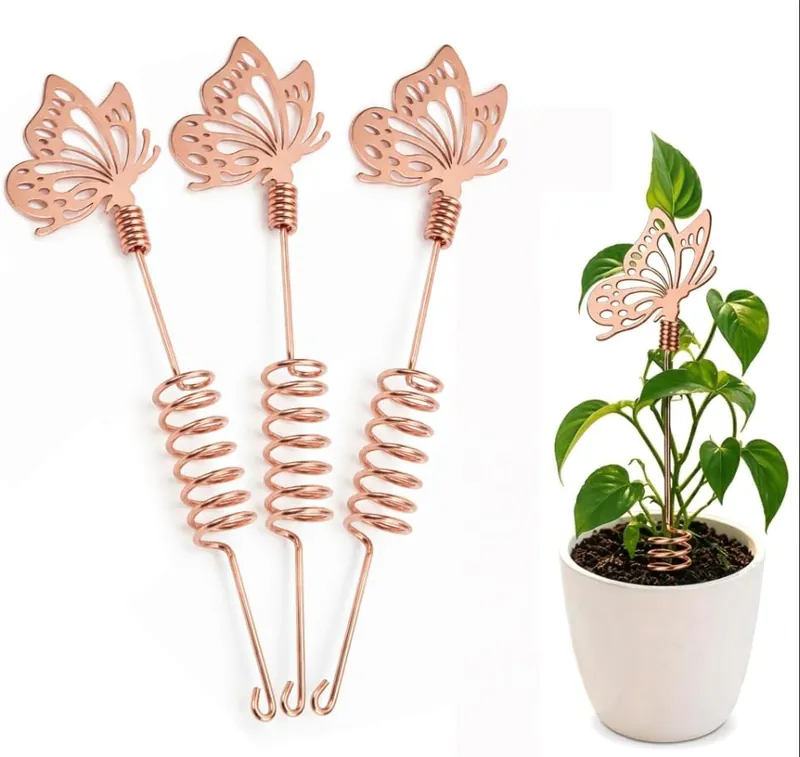
On this page
Key takeaways
- Thrive Garden's Copper Butterfly stakes are listed as 10-gauge, 99.9% copper and cost $39.95 for 3, $74.90 for 6, $144.80 for 12 and $279.60 for 24 (store page (a store we own), October 2026).
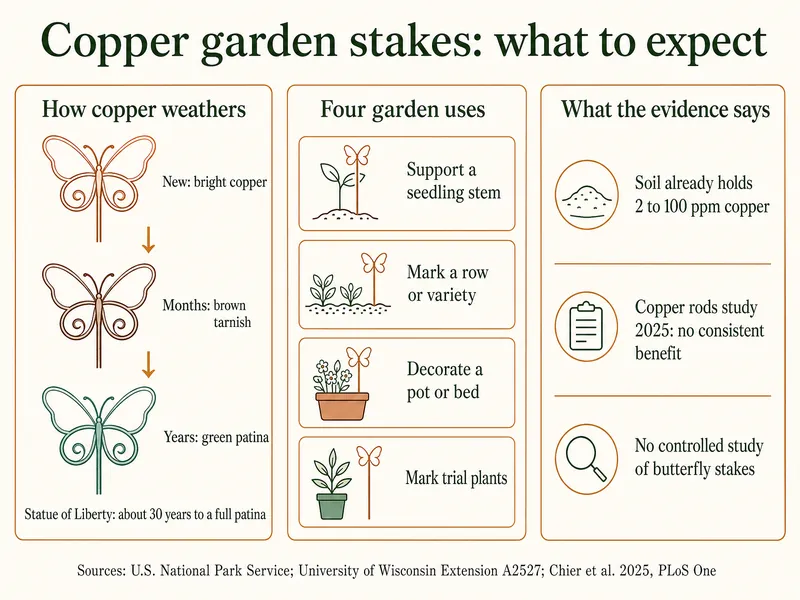
- Bare copper does not chip or peel; it darkens and slowly turns green. The National Park Service says the Statue of Liberty's copper took about thirty years to form a full patina.
- Copper is an essential plant nutrient, and soils already hold 2 to 100 ppm of it; toxicity has come from years of copper fungicide sprays, not from garden ornaments (UW Extension A2527).
- The only controlled study of passive copper in soil, Chier et al. 2025, found no consistent benefit; no study has tested the butterfly shape.
- Use them as plant markers, light supports and decoration, and if you want to test the antenna claim, as the treated arm of a side-by-side trial.
What are copper butterfly garden stakes?
Copper butterfly garden stakes are short, solid copper wire stakes with a butterfly shape at the top and a coiled stem, pushed into the soil of a pot, bed or border. Thrive Garden, which shares its owners with this site, sells them as decorative copper garden stakes and as an electroculture antenna, and describes them as handcrafted from thick 10-gauge, 99.9% pure copper with no wooden core.
They are the decorative member of the copper coil family described in electroculture antenna designs. The coiled stem is the part that links them to electroculture; the butterfly is there for looks. If the electroculture claim is what interests you, start with electroculture antennas for the wider picture, then come back here for the practical side.
Are copper plant stakes good for plants?
Copper plant stakes are good for plants in the ordinary way any sturdy stake is: they hold up a young stem, mark a row and stay put for years. Copper itself is not a hazard at garden scale. It is one of the essential plant nutrients, needed in tiny amounts for photosynthesis, respiration and lignin.
The University of Wisconsin Extension's Soil and Applied Copper (Schulte and Kelling) puts the numbers in proportion. Soils contain 2 to 100 ppm of copper, about 30 ppm on average, most of it locked in minerals. Crops remove less than 0.1 lb of copper per acre per year. Where copper toxicity has occurred, it followed "repeated use of copper-containing fungicides over many years", such as Bordeaux mixture sprayed on potatoes and orchards. A solid stake standing in the soil is a very different exposure, though no study has measured how much copper a stake sheds.
Two practical cautions. A stake pushed in beside a young stem can damage roots, so set it before or at planting. And the butterfly stakes are small decorative pieces rather than tomato canes: use them for seedlings, herbs and potted plants, and a taller stake for anything heavy.
| Pack | Store price | Price per stake | Suits |
|---|---|---|---|
| 3 stakes | $39.95 | about $13.32 | One pot display or a gift |
| 6 stakes | $74.90 | about $12.48 | A small two-group trial in pots |
| 12 stakes | $144.80 | about $12.07 | One raised bed with 4 treated plots |
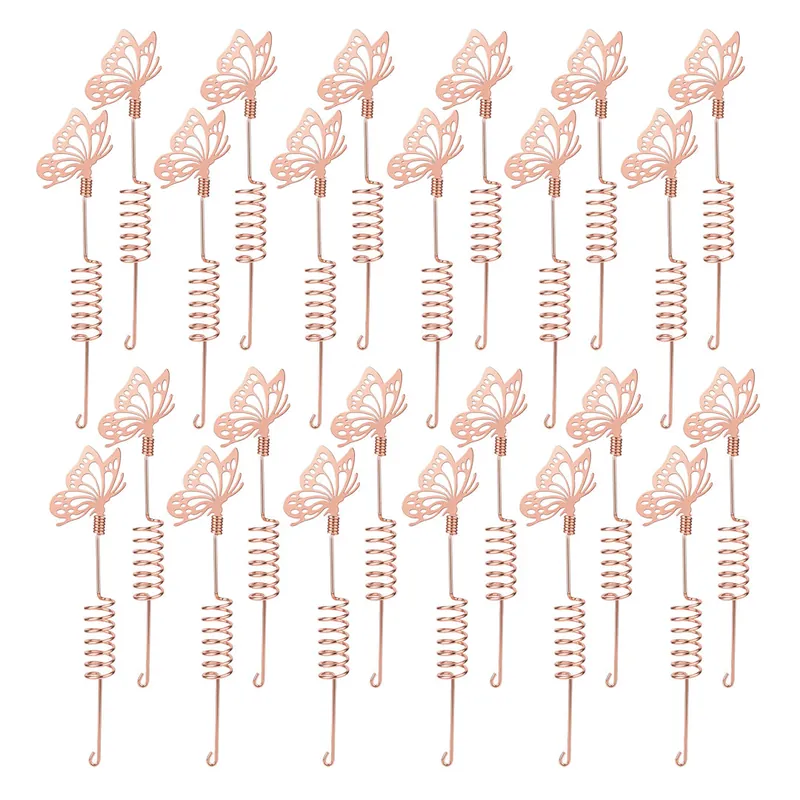
| 24 stakes | $279.60 | $11.65 | Several beds or a replicated pot trial |
How does copper weather outdoors?
Copper weathers from bright metal to brown within months and to a green patina over years, and the coating protects the metal underneath. The National Park Service says the Statue of Liberty "was more of a traditional brown color like an American penny" when it was completed in 1886, and that it took about thirty years for its copper to oxidise fully to the green we know.
Copper stakes in numbers
- 99.9%Copper content the store lists for the butterfly stakesThrive Garden product page (a store we own)
- 30 yearsPatina time for the copper skin of Lady Liberty, 1886 onwardU.S. National Park Service
- 2–100 ppmCopper already present in soilsUniversity of Wisconsin Extension A2527
- 8 weeksLength of the 2025 copper rod trial, which found no consistent benefitChier et al. 2025, PLoS One
A garden stake ages faster than a statue in places, because the part in moist soil and the part splashed by watering tarnish first. Expect a dull brown in the first season, with green and blue-green streaks after several wet winters, sooner near the coast. Thrive Garden's listing makes the same point in its own words: the stakes will not "chip, peel, or fade" like painted decor and develop a patina instead. If you prefer the bright look, a little vinegar and salt on a cloth will lift tarnish, but most gardeners leave it.
Can copper garden stakes work as electroculture antennas?
Copper garden stakes are sold as electroculture antennas, but no controlled study has shown that any passive copper stake improves growth or yield. The best test so far, Chier et al. (2025), placed copper-coiled dowels beside kale, mustard greens, turnips and beets for 8 weeks: copper standing above the soil, as a butterfly stake does, made no measurable difference.
The store's listing goes further than the evidence. It says gardeners report plants that look stronger, more vigorous and better able to handle heat and dry spells, and "some gardeners also notice larger harvests". These are customer impressions without control plots, so they are anecdote. The historical record is no kinder: the USDA's 1926 bulletin tested charged wires at 30,000–60,000 volts and found no well-defined increase in yield. Washington State University Extension reached the same view in 2024, reporting horticulturist Linda Chalker-Scott's view that the promises lack "any reliable scientific evidence". The plain summary is on does electroculture work.
None of that makes the stakes a bad buy, as long as you buy them for what they demonstrably are: long-lasting copper decorations and markers. If you want to know whether they do more in your own garden, the stakes make a tidy treated group for a fair side-by-side test.
How many copper stakes do you need?
The number of copper stakes you need depends on the job: one or two per pot for decoration, one per row for marking, and enough for at least four treated plots if you are testing the electroculture claim. Thrive Garden suggests one per container and spacing of about 2–3 ft in beds; that spacing is the store's guidance, not a measured coverage area.
For a trial in a 4 by 8 ft raised bed, divide it into 8 plots of 2 by 4 ft and give 4 of them, chosen by coin toss, two stakes each. That is 8 stakes, so a 12-pack covers it with spares for markers. For a pot trial, 12 identical pots with 6 stakes is enough to start. The other half of each trial needs no stakes at all, which is the point.
How do you place copper stakes in a bed?
Place copper stakes where they do the job you bought them for, and keep any electroculture trial plots identical apart from the stakes. The store advises pushing each stake 3–4 in into the soil so it stands upright; that is a sensible depth for stability, and it is the store's own instruction.
- As supports: set the stake on the windward side of a seedling, an inch or two from the stem, and tie loosely with soft twine.
- As markers: put one at the start of each row or variety, and keep a written plan, since a butterfly does not say what was sown.
- As decoration: group them in odd numbers at the front of a border or in a container where they catch the light.
- For a trial: put stakes in the treated plots only, at the same depth and position in each, and harvest every plot on the same day. Thrive Garden says its antennas do best on the south side of plants; that is an observation, and a trial is how you would check it.
Placement choices are covered in more detail on antenna placement, and plain copper rods on copper rods in the garden.
How we put this page together
This page draws on Thrive Garden's Copper Butterfly stake product page and product data (material, wire gauge, pack prices and placement advice, checked 23 October 2026 and reported as the store's claims), the U.S. National Park Service's Statue of Liberty FAQ, University of Wisconsin Extension publication A2527 Soil and Applied Copper, Chier et al. 2025 (PLoS One) and USDA Department Bulletin 1379 (1926). Only the store's plain product shots are used. Omitted: customer reviews, its gift copy, and any claim that copper stakes repel pests, save water or replace fertiliser, since no controlled study supports them.
Common questions
Are copper garden stakes solid copper or plated?
Thrive Garden's butterfly stakes are listed as solid 10-gauge, 99.9% copper with no core. Many cheaper decorative stakes are copper-plated steel or painted wire, so check the listing before buying; a plated stake will rust where the coating wears.
Will copper plant stakes harm my vegetables?
Not at normal garden scale. Copper is an essential micronutrient, and soils already hold 2 to 100 ppm of it. Recorded copper toxicity has come from years of copper fungicide sprays, not from solid stakes.
How long do copper garden stakes last?
Many years. Copper does not rust; it forms a thin brown and then green coating that protects the metal beneath, as on copper roofs and the Statue of Liberty.
Can copper stakes be kept from turning green?
Not permanently. Bare copper outdoors keeps reacting with air and water, which is why it moves from bright to brown and, over years, toward a green patina.
Do copper butterfly stakes keep slugs away?
No study has tested butterfly stakes against slugs or any other pest. A single stake standing in soil leaves the ground around it open, so do not rely on it for protection.
Are copper garden stakes safe for children and pets?
They have no power and no loose parts, but the pointed ends can scratch. Place them where children and pets will not fall on them, and push them in far enough to stand firm.
What makes a butterfly stake different from a Tesla Coil antenna?
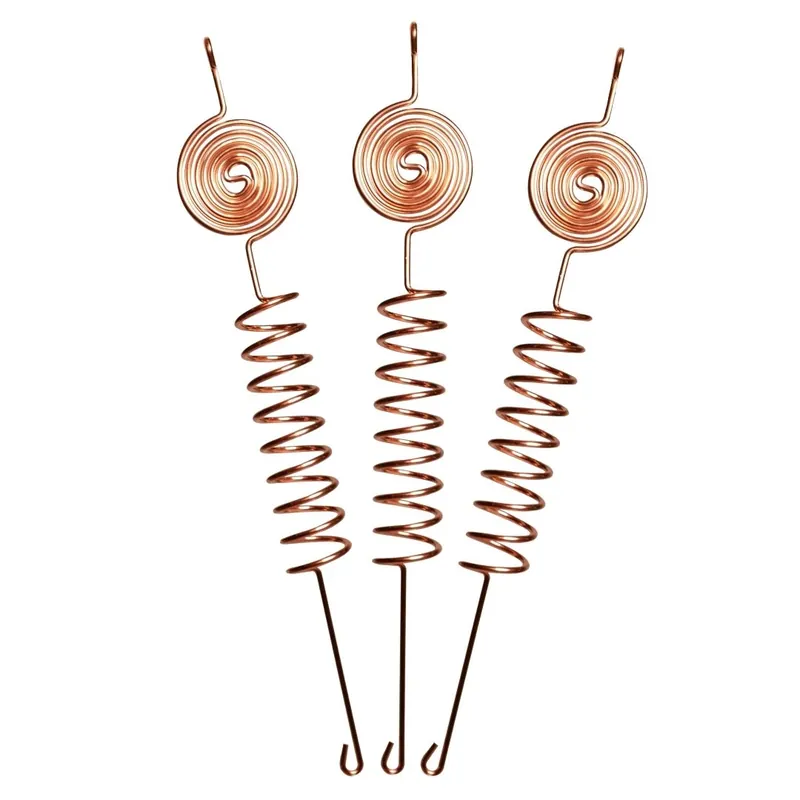
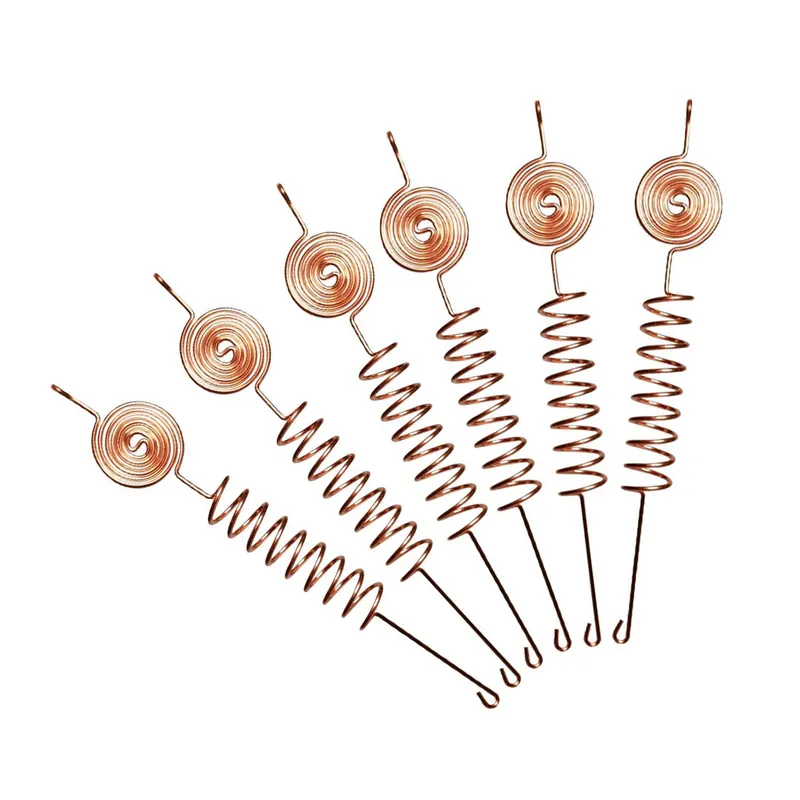
Only the top. Both are bent copper wire with a coiled stem; the butterfly has a decorative wing shape and the Tesla Coil a flat spiral. Neither shape has been tested in a controlled study, and the Tesla version is compared with a real Tesla coil on its own page.
Related guides
 AntennasElectroculture antennas
 AntennasTesla Coil electroculture antenna
- Copper rods in the garden
 Try itHow to test electroculture
Try it in your own beds
Copper Butterfly Garden Stakes
Check current pack sizes and prices at Thrive Garden, then set up a fair side-by-side test.
View at Thrive GardenThrive Garden, which sells the electroculture antennas and copper stakes we link to, is a store owned by the same team as this site. Ownership disclosure
More help: see our guide to electroculture gardening.