
Antennas
How to Make an Electroculture Antenna, Step by Step
To make an electroculture antenna, wind bare copper wire evenly around a 40 cm wooden dowel and push 10 cm into the soil; build a plain dowel too, because the comparison is the experiment.
On this page
Key takeaways
- The build copies the device tested in Chier et al. 2025: "a 40 cm dowel rod coiled with copper wire and inserted 10 cm into the soil".
- That controlled, peer-reviewed trial found no consistent benefit to mustard greens, kale, turnips or beets over 8 weeks, so treat your antenna as an experiment, not a fix.
- Each stake takes about 1 to 1.5 m of bare solid copper wire, 14 or 16 AWG, plus a matching uncoiled dowel as the control.
- Winding-direction rules contradict each other, and no study has tested coil direction; pick one direction and keep it constant.
- Iowa State College's 20 ft collectors of 1930–32 gathered only about one billionth of an amp in fair weather, and yields stayed within experimental error (Research Bulletin 210).
- Build at least four copper stakes and four plain ones for a basic side-by-side test.
The 2025 trial's antenna, in numbers
- 40 cmLength of the copper-coiled dowel in the exposed treatmentChier et al. 2025, PLoS One
- 10 cmDepth the exposed dowel went into the soilChier et al. 2025, PLoS One
- 2 mVVoltage the rods carried into the soilChier et al. 2025, PLoS One
- 1916Year British trials hung bronze discharge wires over oatsAllen, Electricity in Agriculture (1922), p. 100
What do you need to make an electroculture antenna?
You need wooden dowels, bare copper wire, wire cutters and a way to fix the wire ends. Everything is sold at hardware stores, and no part needs to be special or branded.
- Wooden dowels, about 12 mm (½ in) thick, cut to 40 cm (16 in). Hardwood lasts longer in wet soil than pine or bamboo. Cut twice as many as you plan to coil.
- Bare solid copper wire, 14 or 16 AWG (about 1.6 or 1.3 mm thick). Allow 1 to 1.5 m per stake. Solid wire holds a coil; stranded wire splays. Gauge choices are explained on copper wire for electroculture.
- Wire cutters and pliers, plus small staples or a 2 mm drill bit to anchor the wire ends.
- A pencil, a ruler and waterproof labels for marking depth and numbering plots.
- A notebook or the record sheet from how to test electroculture.
The dimensions come from the 2025 PLoS One trial run at Marquette University, which used copper-coiled 40 cm dowels with 10 cm in the soil. That trial did not report wire gauge, turn count or direction, so those choices are yours; the important thing is to make every treated stake identical.
How do you make an electroculture antenna step by step?
Making an electroculture antenna takes about ten minutes per stake once you have the materials. Work through these steps for every copper stake, then make the same number of plain stakes.
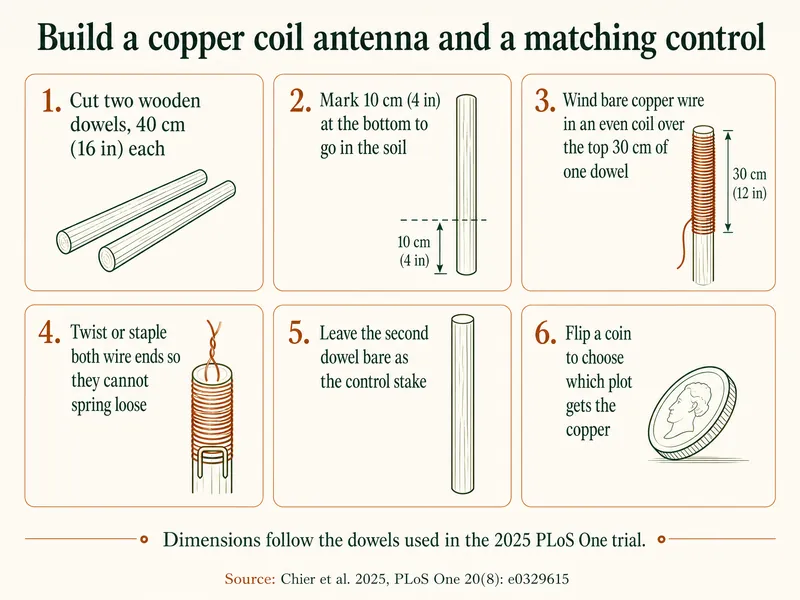
- Cut and mark. Cut a dowel to 40 cm. Draw a line 10 cm from one end: that part goes in the soil and stays bare.
- Anchor the wire. Drill a small hole through the dowel just above the 10 cm line, or tap in a staple. Thread 3 cm of wire through and bend it flat so it cannot slip.
- Wind the coil. Turn the dowel with one hand and feed the wire with the other, keeping each turn snug against the wood. Space the turns evenly, about 1 cm apart, up the remaining 30 cm. Count the turns and write the number down.
- Finish the top. Fix the top end with a second hole or staple, cut the wire with 2 cm spare, and bend the sharp end down flat against the wood.
- Make the control. Take a second 40 cm dowel, mark the same 10 cm line, and leave it with no wire. It goes in the untreated plots so both groups have a stake.
- Label and set. Number every stake, decide by coin toss which plot gets which, then push each one 10 cm into moist soil beside the plant at planting time.
The control stake matters more than it looks. When Iowa State College tested buried collector cables in 1930–32, the station also dug and refilled furrows without cable in the control plots, "to insure the same degree of tillage" in both (Research Bulletin 210, p. 11). A plain dowel does the same job in a garden: the only difference between your groups is the copper.
Which way should the coil wind?
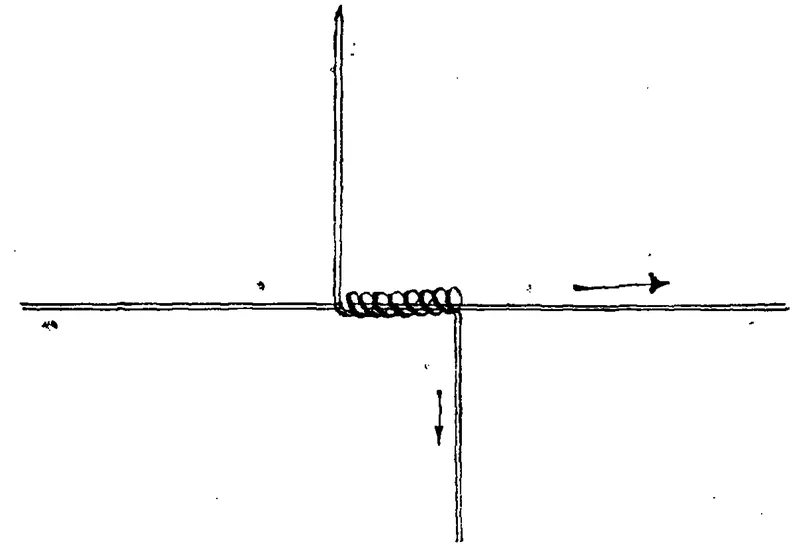
Wind the coil whichever way you like, and keep it the same on every stake: no study has tested whether coil direction changes anything. The rules in circulation contradict one another, which is itself a clue that none came from a trial.
Robert A. Nelson's long-running Rex Research web page, an enthusiast compilation, says a nine-turn conical coil should be wound counter-clockwise in the Northern Hemisphere and clockwise in the Southern, and stuck in the ground about a foot north of the plant. It gives no source for the rule. Thrive Garden's ready-made Tesla Coil antenna is described by the store as having a clockwise coil, which is the opposite for a northern garden. The 2025 PLoS One authors did not report a direction at all, and the 1920s designs used straight wires and fans, not coils.
If coil direction interests you, it can be tested like anything else: three groups of plots, clockwise, counter-clockwise and plain stake, assigned by coin toss. Expect to need more plots than a two-way test to see anything. Electroculture antenna placement covers direction and compass rules in more detail.
How tall should a DIY antenna be?
A 40 cm stake with 10 cm in the soil, as in the 2025 trial, is a sensible size for a vegetable bed; no height has been shown to change crop results. In principle a taller conductor spans more of the air's natural field, which near the ground is about 100 volts per metre in fair weather. The 2025 authors noted that this could imply about 4 V across a 40 cm rod, yet the rods carried only about 2 millivolts into the soil.
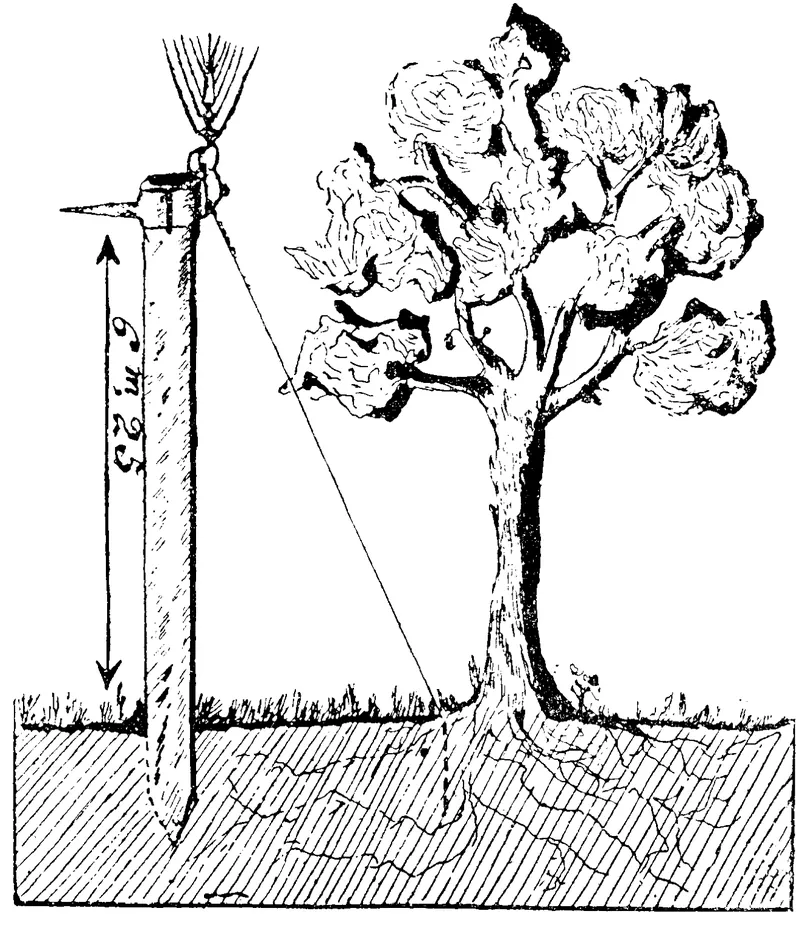
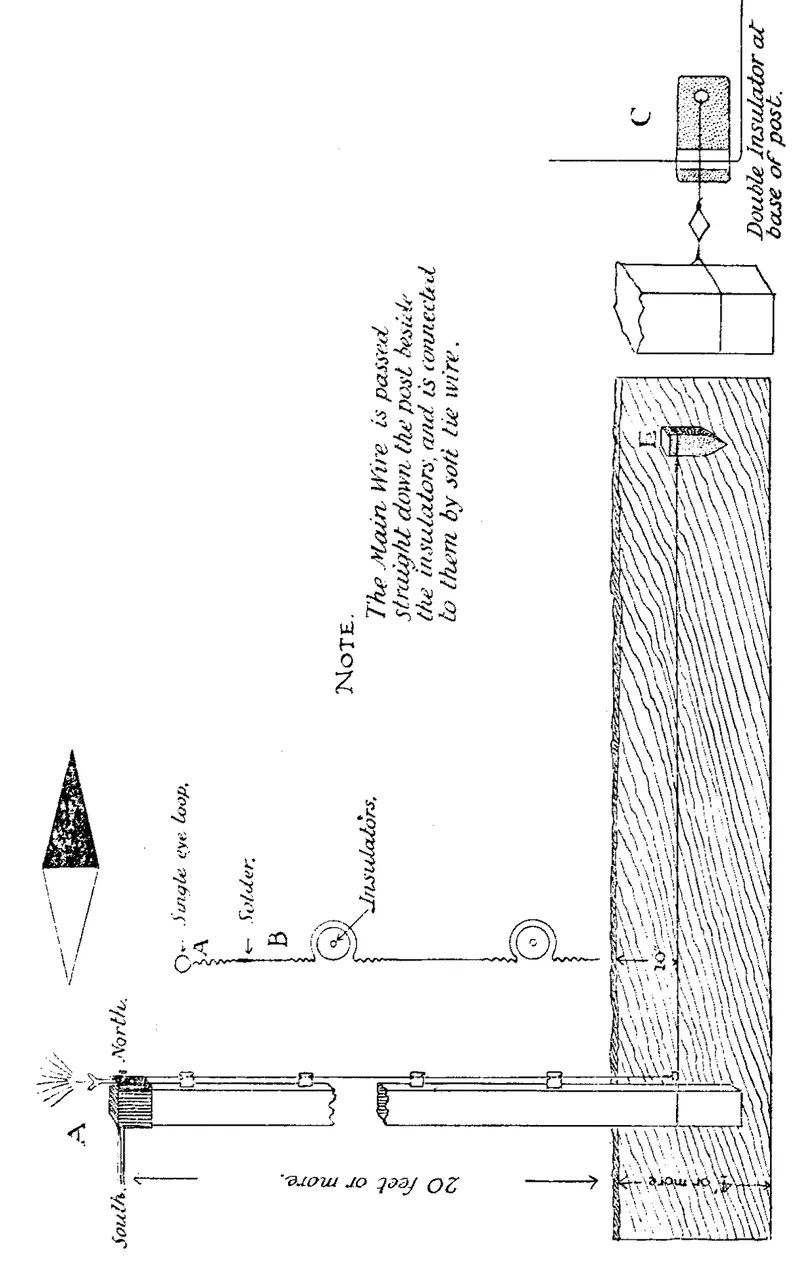
Going much taller has been tried. Christofleau's booklet (c. 1927) put its collector on a post "at least 20 feet from the ground", and Iowa State College mounted five collectors, one of them an original Christofleau head, 20 ft up. In fair weather those masts gathered roughly half a billionth to one billionth of an amp, and crop yields beside the buried cables stayed within experimental error. A physics model by Dufour (2026) of a 1783 collector found the field boosted only within millimetres to centimetres of the metal tips, and judged any fair-weather effect on plants "subtle and highly localized". Height adds work, wind load and, near overhead lines, real danger, with no demonstrated payoff.
DIY vs ready-made electroculture antennas
A homemade antenna costs less and lets you control every detail; a ready-made all-copper stake saves time, looks tidier and outlasts a wooden dowel. Neither has a demonstrated advantage for plants, because neither has been shown to affect plants.
| Feature | Homemade coil on a dowel | Ready-made all-copper stake |
|---|---|---|
| Matches the 2025 trial design | Yes: copper wire coiled on a 40 cm dowel | No: a different shape, never trialled |
| Lifespan outdoors | Wood softens in wet soil within a season or two | Solid copper lasts for years, browning then greening |
| Control stake | Plain dowel of the same size | Plain stake of similar size and material |
| Consistency between stakes | Depends on careful winding | Factory-identical |
| Evidence level for crop benefit | Controlled, peer-reviewed: no consistent benefit | Promotional claim only |
If you buy rather than build, Thrive Garden, a store owned by the same team as this site, sells Tesla Coil packs from $39 for three (store price, October 2026); see the Tesla Coil antenna page and the wider electroculture antennas guide. Whichever you choose, keep the stakes identical within the test.
How do you test a homemade antenna?
Test a homemade antenna by comparing plots that differ only in the copper. The simplest fair version needs eight small plots or pots and one crop.
- Choose a fast crop you can weigh: radishes, lettuce or bush beans. Sow one variety from one packet.
- Set out four pairs of plots or pots that look alike, side by side.
- In each pair, toss a coin: heads gets a copper stake, tails a plain dowel.
- Water, feed and weed every plot the same way, on the same days.
- At harvest, weigh each plot separately and note the date of first harvest.
- Compare the copper and plain plots pair by pair. If copper wins in some pairs and loses in others, the difference is probably ordinary plot-to-plot variation.
Small differences mean little. Even the controlled 2025 trial, with 10 plants per treatment per crop, saw a 2.5 g biomass bump in beets and turnips that its authors put down to small samples. The USDA's 1926 bulletin recorded a rye plot that beat its control by 40 per cent under electricity and by 43 per cent the next year with none. The full method, with a printable record table, is on how to test electroculture, and what earlier trials found is on does electroculture work.
How we put this page together
The build dimensions follow Chier et al. 2025 (PLoS One 20(8): e0329615), the only controlled, peer-reviewed trial of copper-coiled dowels. Height and current figures come from Iowa Agricultural Experiment Station Research Bulletin 210 (Dorchester, 1937, pp. 3, 11, 14–16), Christofleau's booklet Electroculture (c. 1927, printed p. 8) and Dufour 2026 (Comptes Rendus Mécanique, doi 10.5802/crmeca.346); the rye example is from USDA Department Bulletin 1379 (1926, pp. 12–13). The winding-direction rule is reported from Robert A. Nelson's Rex Research web page, which cites no source, and the store's coil direction from Thrive Garden's own description. Checked October 2026. Left out: builds that add batteries, magnets or high voltage, and claims of results from videos and forums.
Common questions
Can you make an electroculture antenna from copper pipe or a copper rod?
You can, though no trial has tested a solid copper pipe or rod against a wire coil. The only controlled test used copper wire wound on a wooden dowel, so a coil keeps your build closest to the tested design.
How many turns should an electroculture coil have?
No source gives a tested number. Turns about 1 cm apart along 30 cm of dowel give roughly 30 turns; whatever you choose, use the same count on every stake and write it down.
Does the wood type matter for a DIY antenna?
Only for durability. Hardwood dowels resist rot in damp soil longer than pine or bamboo; untreated wood avoids adding preservatives to a vegetable bed. Use the same wood for the control stakes.
Should the copper wire reach into the soil?
Most DIY designs leave the bottom 10 cm of dowel bare and keep the coil above ground, as in the 2025 trial. Some designs run the wire down into the soil; no study has compared the two, so pick one and use it consistently.
Can you put a homemade antenna in a pot?
Yes. A 40 cm dowel with 10 cm in the soil fits a one-gallon pot, which is the container size used in the 2025 trial. Use one stake per pot and plain dowels in the comparison pots.
Do magnets or crystals make a homemade antenna work better?
No controlled study has tested magnets or crystals on garden antennas. Adding them also adds a second change, so a test could not tell which part made any difference. Keep the build to copper and wood.
When should you put homemade antennas in the ground?
At sowing or transplanting, before roots spread, so the stake does not damage an established root zone. Set copper and plain stakes on the same day to keep the comparison fair.
More on DIY antennas
More help: see our honest guide to electroculture.