
Learn
Electroculture Gardening for Beginners: A Realistic Start
Electroculture gardening for beginners works best as a cheap side-by-side experiment: get the soil, sun and water right first, add copper antennas to one bed only, and weigh both harvests.
On this page
If you have seen copper coils in other people's raised beds and want to try electroculture, this page is the realistic version. It explains what the evidence leads you to expect, which simple setups people use, and how to run your first season so that you learn something whatever happens. Most of it is ordinary good gardening, because that is what decides the size of your harvest.
Key takeaways
- No controlled trial has confirmed a yield gain from passive antennas; a 2025 PLoS One pot study of 4 vegetables found no consistent benefit after 8 weeks.
- NC State Extension says vegetables need at least 6 hours of sun a day, 8-10 being optimal, and at least 1 inch of water a week.
- WSU Extension advises starting with a soil analysis from a reputable lab before adding anything to a bed.
- The USDA's 1926 trials found untreated plots on one farm could differ by 43% in a season, so a single bed comparison can mislead; repeat it.
- Fast crops such as radishes, lettuce, mustard greens and beets give a result within one season; the 2025 trial harvested its greens and roots at 8 weeks.
- Passive antennas are safe; never copy the 30,000-60,000 volt powered networks used in old field trials.
What should beginners know about electroculture gardening first?
Beginners should know that electroculture is an experiment, not an established technique, so set expectations and a budget to match. The USDA's 1926 Bulletin 1379 recommended against it after a decade of field trials, and the one modern controlled test of copper rods, by a team at Marquette University, saw no steady benefit to height, leaf greenness or yield. Many gardeners report greener plants after adding antennas; trials so far have not confirmed it.
That does not make trying it pointless. A small, careful trial costs little and teaches you how much your own beds vary. Read does electroculture work? for the full evidence and what is electroculture? for the different types before you start.
Numbers a beginner can use
- 6 hoursMinimum daily sun for vegetables; 8-10 is optimalNC State Extension, 2021
- 1 inchMinimum water per week for vegetablesNC State Extension, 2021
- 8 weeksLength of the 2025 copper-rod pot trial on four vegetablesChier et al. 2025, PLoS One
- +43%Yield difference between two unelectrified USDA plots in 1916USDA Bulletin 1379, p. 13
Which plants do people try electroculture on?
People try electroculture on almost everything, but quick-growing vegetables make the best beginner test crops because you can weigh a result within weeks. The 2025 trial used mustard greens, kale, turnips and beets, all harvested after eight weeks. Radishes and loose-leaf lettuce are similar: short-lived, easy to weigh, and grown in enough numbers to compare fairly.
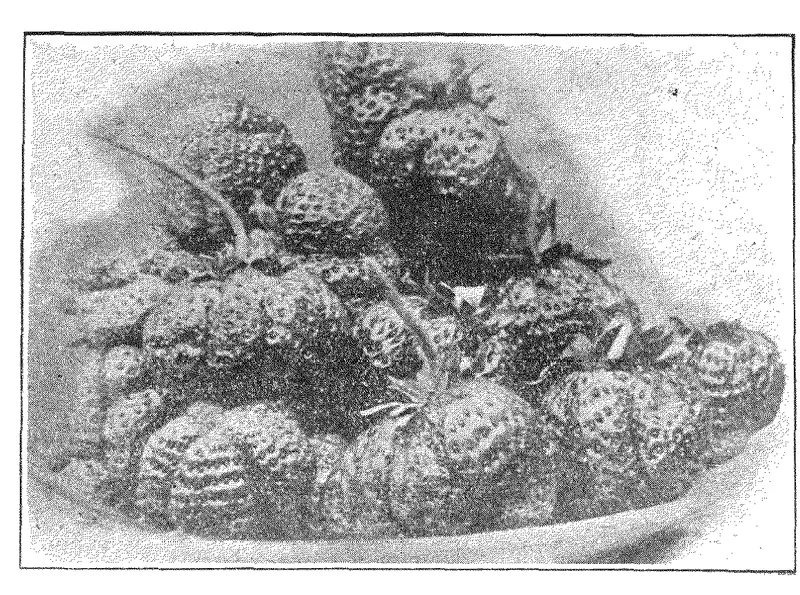
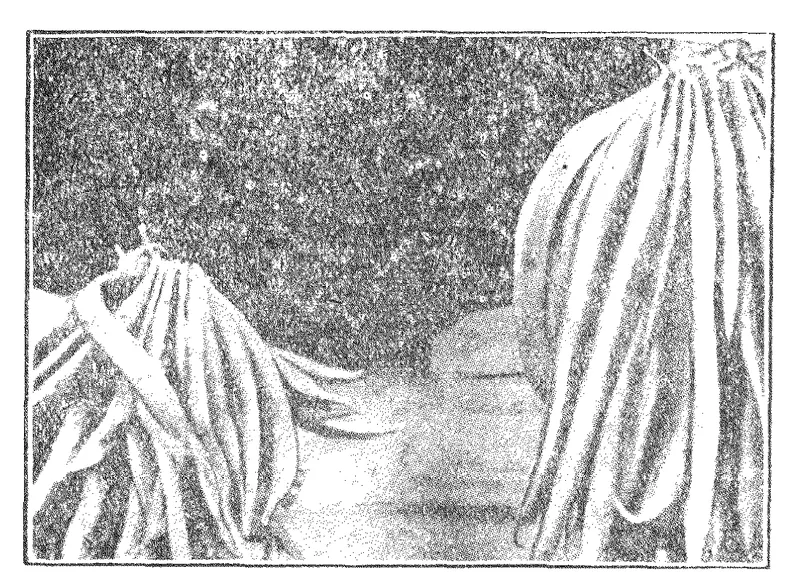
The historical record covers a wide range. The USDA tested wheat, rye, corn, soybeans, cowpeas and ten vegetables, from tomatoes to cabbage; Hull's 1898 book Electro-Horticulture reports Lemström's barley and Paulin's potatoes; Christofleau's booklet pictures beans, vines, oats and strawberries. None of these crops showed a confirmed response in controlled trials, so there is no "best electroculture plant". Pick what you like to eat, and grow enough of it to measure.
What electroculture techniques are there?
The main electroculture techniques for gardens are copper coil antennas, wire wound around wooden stakes, bare copper wire run along a bed, and earth batteries made of buried copper and zinc. The antennas and wire are passive, with no power source; an earth battery is a weak galvanic cell, which Iowa measured at about 0.5 mA at about 1 volt. Historical powered methods, such as overhead wires charged by a transformer, are dangerous and belong in the history books.
| Technique | What it is | Cost and effort | What the evidence says | Evidence level |
|---|---|---|---|---|
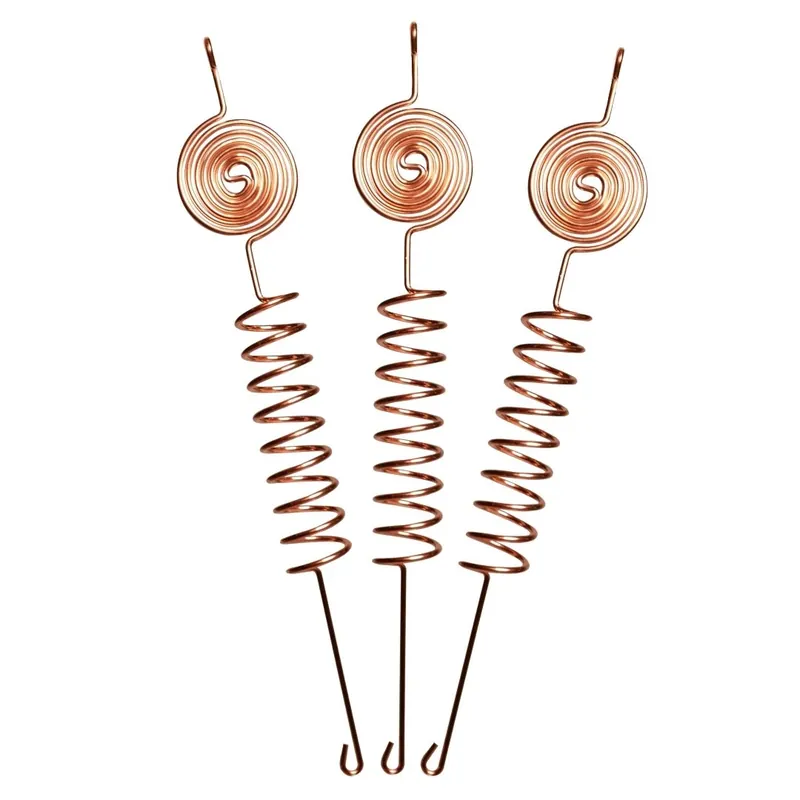
| Copper coil antenna | Solid copper stake with a coiled or spiral top, pushed into the soil | About $11.33-$13 a stake at Thrive Garden's prices, depending on pack size; minutes to install | Spiral stakes have not been trialled; the nearest test, coil-on-dowel rods in 2025, gave no consistent benefit | No direct test (related design: controlled, peer-reviewed) |
| Wire-wound stake | Copper wire wrapped around a wooden dowel | Very low; DIY | The design the 2025 trial tested: no consistent benefit when exposed | Controlled, peer-reviewed |
| Buried copper | Copper rod or dowel set below the soil surface | Very low | About 2.5 g more biomass for beets and turnips in 2025 (p < 0.01), which the authors put down to small samples | Controlled, peer-reviewed |
| Earth battery | Copper and zinc plates buried and joined by wire | Low; some digging | Iowa 1932: +9.9% oat grain on poor soil (significant), not repeated in 1933 | Controlled government or station trial |
| Tall mast collector | Pointed metal head on a post, wire buried along the bed | High; a 20 ft post | Iowa tested Christofleau's: differences within error | Controlled government or station trial |
Our guides to electroculture antennas, how to make an electroculture antenna and copper wire for electroculture cover each build in detail.
What do you need to start?
You need a soil test, a sunny spot, two matched beds or groups of containers, some copper antennas, and a kitchen scale. The soil test comes first: WSU Extension's article on electroculture says good results start "with good soil and growing the right plant in the right place", and recommends a soil analysis from a reputable lab. NC State Extension adds that samples should be analysed "for proper pH and fertility requirements".
For the antennas, you can wind copper wire around wooden stakes yourself or buy ready-made ones. An inexpensive ready-made option is the copper coil stake from Thrive Garden, which shares ownership with this library; our page on the Tesla Coil electroculture antenna explains what it is and what the name does and does not mean. Thrive Garden suggests placing antennas on the south side of plants, 3-4 inches deep and every 2.5-3 feet; that is the store's own observation, not a tested rule, so keep spacing the same in every treated plot rather than treating it as a recipe.
How do you set up your first electroculture bed?
Set up your first electroculture bed as a pair: two plots that are as alike as you can make them, with antennas in one chosen at random. Fill them with the same soil mix, sow the same seed variety on the same day, and give both the same water and sun. Toss a coin to decide which plot gets the copper, so that your hopes do not pick the better spot.
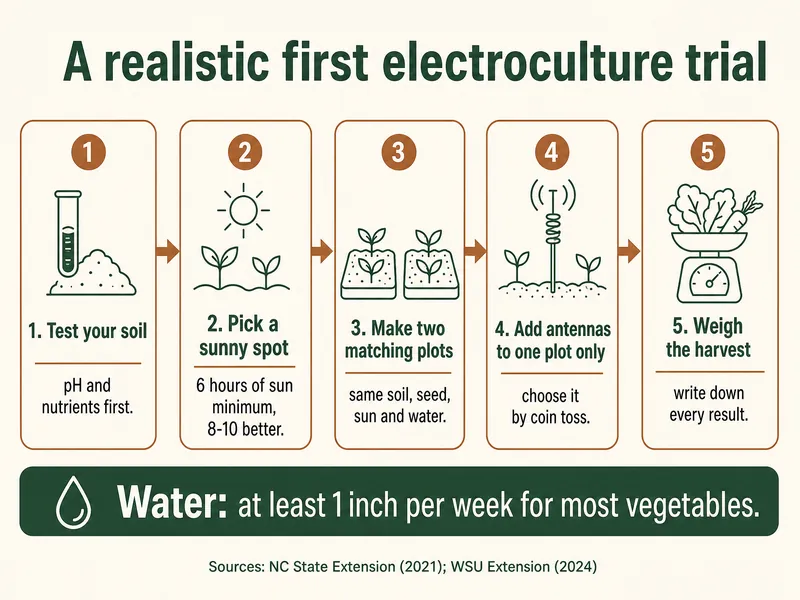
If you can manage more than one pair, do. The USDA learned the hard way that two plots side by side can differ by 40% or more with no treatment at all, and Iowa's Research Bulletin 210 found neighbouring chard and beet plots varying by more than 50%. Three or four small pairs spread across your garden give a much fairer picture than one large pair. Containers work well, too: they make it easy to use identical soil, as the 2025 trial did with 1-gallon pots.
How will you know if it did anything?
You will know only by measuring: weigh the harvest from each plot and compare the totals, plot by plot. Looks are not enough, because plants in a slightly sunnier or wetter spot will look better whether or not copper is nearby. Write down sowing dates, watering, rainfall, pests and the final weight of each plot's crop.
If the antenna plots come out ahead in most pairs, and again in a second season with the plots swapped, you have a result worth sharing. If the difference flips from pair to pair, that is the normal background variation the USDA and Iowa researchers found. The step-by-step method, including how to record results, is on how to test electroculture; the research behind it is collected on electroculture studies.
How we put this page together
This beginner's guide combines gardening basics from NC State Extension (2021) and WSU Extension (2024) with trial results from the 1926 USDA bulletin, Iowa's 1937 bulletin and the 2025 PLoS One copper-rod paper, plus crop lists from Hull's 1898 book and Christofleau's booklet. Thrive Garden's placement suggestions are quoted from its product listing and labelled as the store's own. Pages were checked October 2026. Left out: advice to build powered or high-voltage setups, claims that antennas replace fertiliser or watering, and health claims.
Common questions
How many electroculture antennas does a beginner need?
Enough to treat one plot the same way you would treat a whole bed, plus nothing in the matching control plot. For a pair of small raised beds, a handful of stakes is plenty; consistent spacing matters more than the number.
Can you try electroculture in pots and containers?
Yes, and containers make a fair test easier because every pot can get the same soil mix. The 2025 PLoS One trial used 1-gallon pots, copper dowels in the treated pots and 10 plants per treatment for each crop.
Should you stop fertilising when using electroculture?
No. Feed according to a soil test, the same way in both plots. No controlled trial supports the idea that antennas replace fertiliser, and changing feeding in only one plot would ruin the comparison.
Does the direction of the coil matter for beginners?
Coil direction is a common forum topic, but no controlled trial has tested clockwise against counterclockwise. If you are curious, make it a separate comparison; see electroculture antenna placement for what the historical sources said about direction.
When is the best time to start an electroculture trial?
At sowing or transplanting, so both plots start equal. Starting midseason, after one bed has already pulled ahead, makes the result hard to read.
Are copper antennas safe around children and pets?
Unpowered copper stakes are as safe as other garden stakes, though pointed tips deserve care. Never connect antennas to mains power, batteries or anything that makes high voltage.
What if my antenna bed does better?
Note it, then repeat the trial next season with the beds swapped. One good season in one bed is consistent with ordinary soil and weather differences; a gain that survives a swap and a second season is far more convincing.
Next steps
More help: see our electroculture gardening home page.